
Stone County Projected Release Dates
A projected date is a calculation or planned correctional event. It is not always the day a person physically leaves. The actual release follows the controlling judgment, agency calculation, required approval, institutional processing, and any other valid hold. Missouri also uses several date labels, so calling all of them “the projected release date” can hide major legal differences.
Start by asking where the person is held. The Stone County Detention Center handles local jail custody. The Missouri Department of Corrections, or MODOC, handles people committed to state prison and people on state probation or parole. Stone County has no state prison, so a Stone County case resulting in prison is served at a MODOC institution elsewhere. The county roster cannot calculate that state prisoner's date.
Scheduled versus actual release. A listed date can mark eligibility, a planned conditional release, or sentence expiration. Confirm the actual custody change with the agency holding the person.
Stone County Custody Date Paths
The same name can appear in court, jail, and correctional records, but each office owns a different part of the calculation. A court sets the sentence and awards or addresses credit through its judgment. Jail or corrections staff apply the controlling documents to custody records. The Parole Board makes parole decisions within its authority.
| Custody stage | Date source | What to expect |
|---|---|---|
| Stone County pretrial detention | Case.net, court, and jail | Often no fixed release date; bond and hearings are not exit promises |
| Stone County jail sentence | Judgment, jail credit, and jail computation | Ask the jail for the current sentence calculation |
| MODOC prison sentence | MODOC offender search, data fields, and caseworker | Several minimum, maximum, conditional, or parole dates may apply |
| Parole or conditional release | MODOC and Parole Board record | Physical release may begin supervision rather than final discharge |
| Probation supervision | Court order and MODOC field record | Community supervision has its own term and discharge date |
A pretrial detainee has not yet received a final sentence computation. A bond amount may create a path out of jail, but release still depends on the court terms, processing, and other holds. A hearing date merely schedules court action. Neither should be published as a projected release day.
Find a Stone County Release Date
Use a short agency-based sequence. A search result is strongest when the DOC number, booking number, cause number, birth information, and county all point to the same person.
- Confirm whether the person is in the Stone County Detention Center or a MODOC institution. A transfer ends one custody record and begins another.
- For a local detainee, read the Stone County court docket for the judgment or next hearing, then call the jail for its present custody calculation.
- For a state prisoner, search the MODOC active offender portal by DOC ID when available. Otherwise use the exact name and compare identity, offense county, sentence, and assignment.
- Review the official MODOC data definitions before interpreting a minimum or maximum release date. One person may have several sentence rows.
- Ask the institutional caseworker or the record-owning office to explain a current calculation. Confirm the actual exit when the date approaches.
The complete county release-record and custody search paths are available from the Stone County released inmates search. That record can confirm an exit after it happens, while this calculation work concerns a future or tentative date.
Stone County MODOC Date Fields
MODOC's interactive offender search covers active offenders, including incarcerated people, probationers, and parolees. It expressly excludes discharged offenders. The Sunshine Law offender database has broader historical reach for people who are or have been under department supervision, but it can return several rows for one person because charge and sentence records are separate.
| Official field | Meaning |
|---|---|
| Sentence-I Minimum Release Date | MODOC's calculated minimum date on the active sentence |
| Sentence Maximum Release Date | The maximum release or sentence-expiration day |
| Completed Flag | “Y” means that particular sentence row is complete |
| Sentence-I Date | Sentencing date drawn from the judgment papers |
| Sentence County and Offense County | Counties tied to the sentence and underlying offense |
| Assigned Place | Institution or field assignment interpreted with MODOC location data |
Do not treat a minimum date as a guaranteed gate date. Do not treat a maximum date as the most likely exit. A completed flag on one row can coexist with another active sentence. Numeric placeholders for life, indeterminate or interstate cases, and some assessment or investigation records are not ordinary calendar dates.
Which Missouri Release Date Matters?
Missouri separates minimum release, maximum release, conditional release, and Presumptive Parole Release Date. The state’s conditional-release framework is one part of that distinction. These terms answer different questions, and only the record tied to the person's full sentence structure can show which one controls next.
- Minimum release date
- A calculated minimum point on the active sentence. Eligibility does not guarantee release.
- Maximum release date
- The maximum or expiration date shown for the sentence row, subject to correct record interpretation.
- Conditional release date
- A statutory release from confinement into supervision, subject to Board conditions and possible extension.
- Presumptive Parole Release Date
- A tentative Parole Board date tied to continued appropriate conduct and an acceptable release plan.
- Actual release date
- The date the custodial agency records the physical custody change.
The MODOC glossary defines the presumptive parole date as tentative.
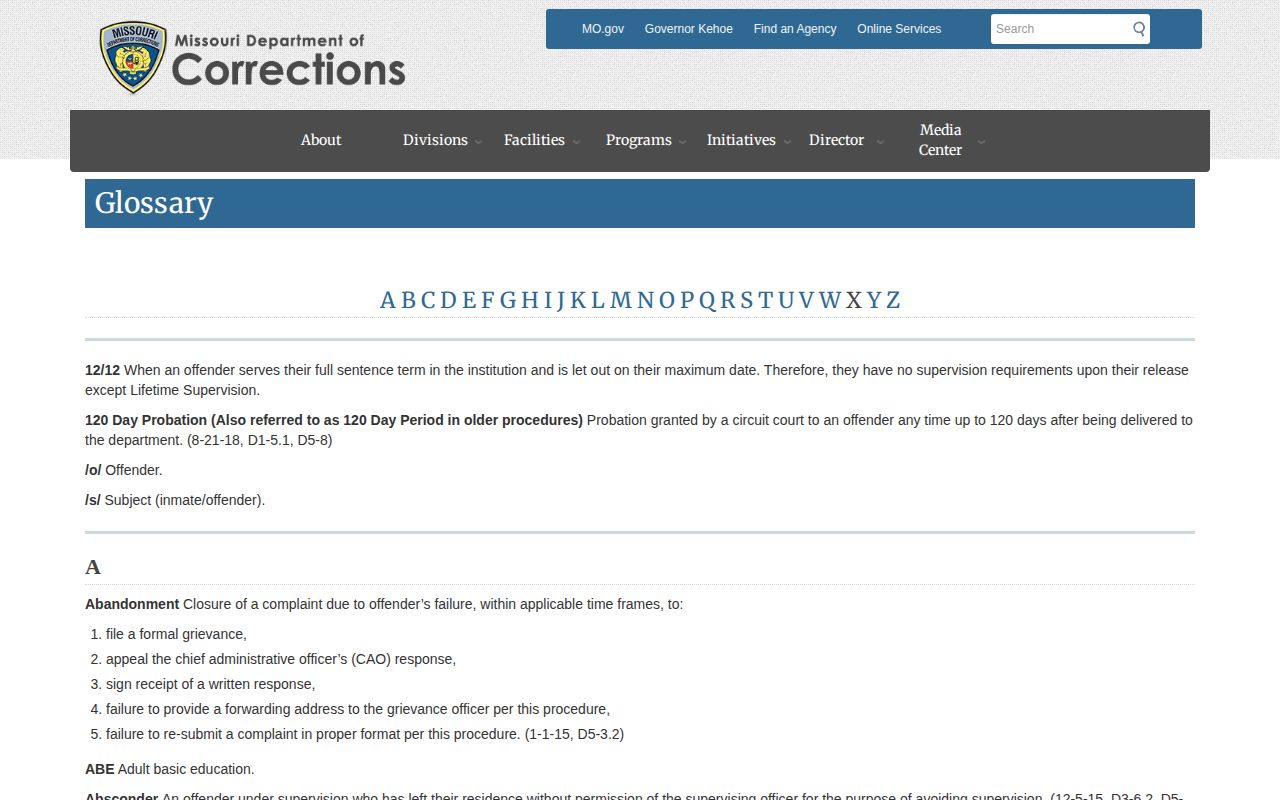
The official definition shows why a presumptive date must be checked against later Board action, institutional conduct, release planning, and the live custody record.
Stone County Conditional Release Dates
Missouri section 558.011 generally divides qualifying non-dangerous-felony sentences into confinement and conditional-release portions. For a term of nine years or less, the conditional-release portion is generally one third. For more than nine through fifteen years, it is three years. For more than fifteen years, it is five years. The law includes exclusions, so these fractions should never be applied without checking the offense and sentence.
Conditional release does not mean final discharge. The person leaves confinement under Parole Board conditions and Division of Probation and Parole supervision. The Board may extend the date through the process authorized by the statute. A detainer can also change the physical destination even when MODOC ends confinement on that date.
The official conditional-release sentence provisions show the qualifying portions and Board authority.
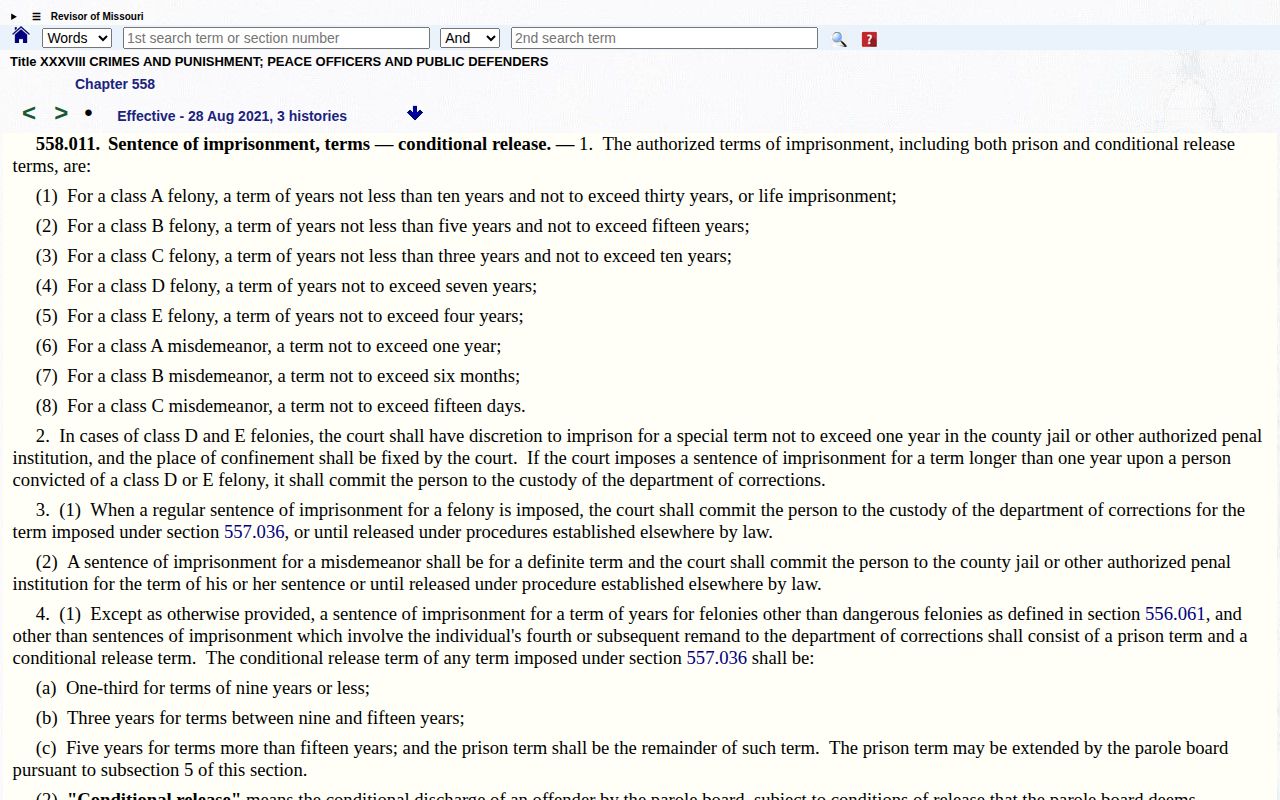
The statute is the starting point, while the judgment and current MODOC calculation determine how the rule applies to one sentence.
Stone County 85 Percent Rule
The 85 percent rule does not apply to every Missouri inmate. Section 558.019(3) addresses a person convicted of a dangerous felony as defined by section 556.061 and committed to MODOC. The provision generally requires service of 85 percent of the sentence, or until age seventy after at least 40 percent, whichever occurs first.
The statute also contains 40, 50, or 80 percent minimum prison terms for some covered non-dangerous-felony cases based on prior prison commitments and other terms. A “minimum prison term” is the period before eligibility for parole, conditional release, or another form of early release. Eligibility is not the same as an order to release.
Correct use requires the offense, offense date, statutory definition, prior commitments, concurrent or consecutive structure, jail credit, and any special restriction. A simple sentence-length percentage cannot replace the official calculation.
The Missouri minimum prison term statute provides the actual scope.
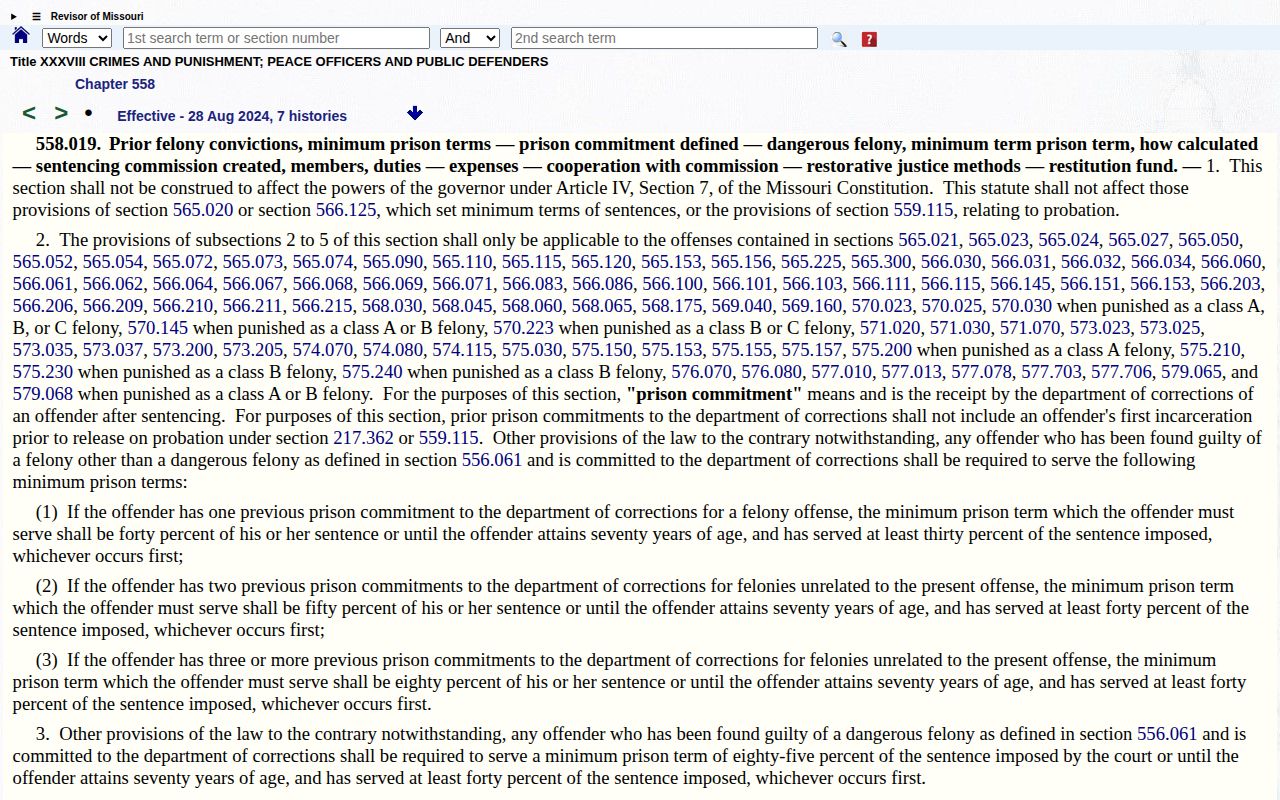
The statutory text supports a case-specific review and directly contradicts the claim that all state prisoners must serve the same percentage.
Why Stone County Release Dates Change
A date can move because the legal record, correctional calculation, or release decision changes. Some events alter eligibility. Others leave the date intact but change where the person goes next.
| Factor | Possible effect |
|---|---|
| Presumptive parole date | Remains tentative while conduct and the release plan are reviewed |
| Consecutive sentences | Minimum eligibility terms may be added under section 217.690, subject to its rules |
| Conditional-release extension | Board process can move release toward sentence expiration |
| Institutional violation | Can affect Board action or an applicable correctional calculation |
| Court amendment or jail credit | A corrected judgment, credit, or later order can alter the computation |
| Detainer or another case | The person may leave one custody and immediately enter another |
| Parole denial or reconsideration | Eligibility or a hearing does not produce immediate community release |
| Earned compliance credit | Can shorten eligible community supervision, not prison confinement |
Section 217.703 concerns earned compliance credits during eligible community supervision. It should not be called prison good time. The official earned compliance credit and discharge statute explains that separate post-release framework.
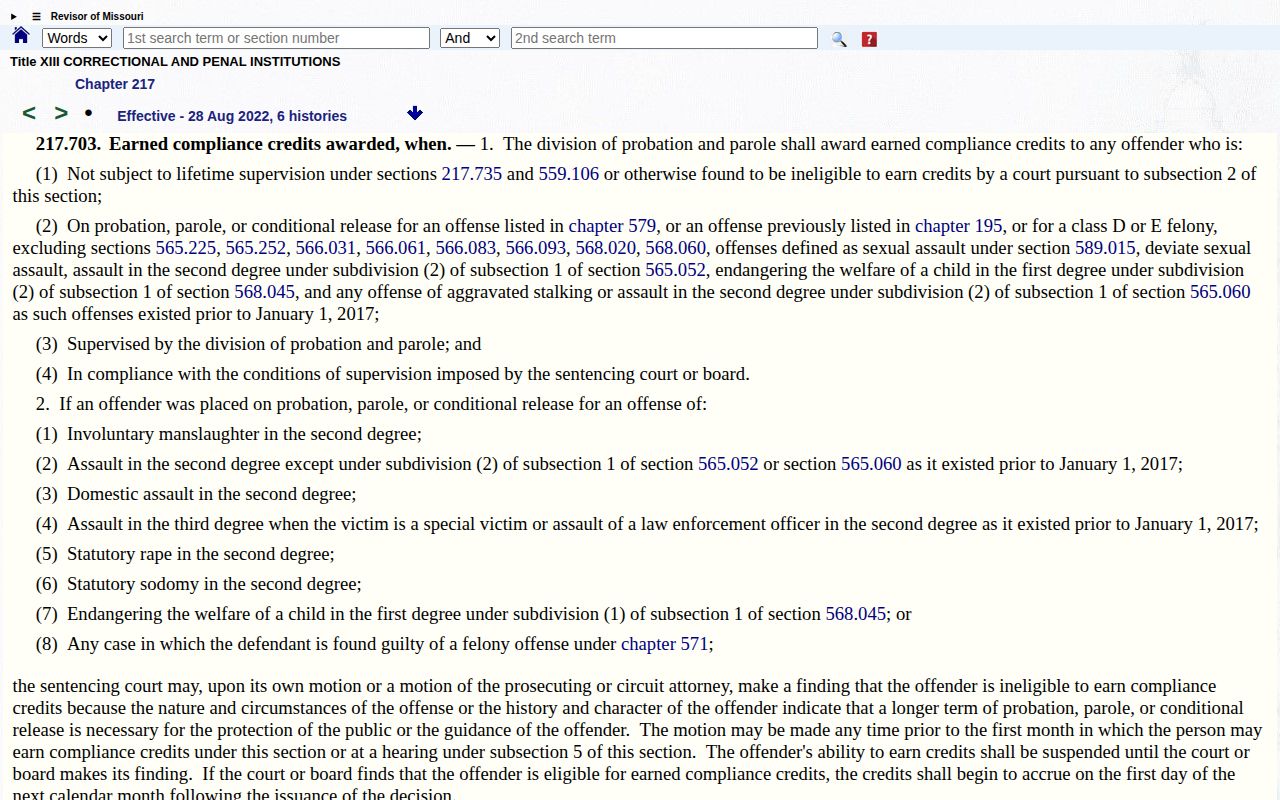
The statute helps separate a supervision discharge calculation from the earlier date a person leaves prison.
Stone County Parole Date Checks
A parole hearing can result in a future date, denial, reconsideration, rescission, cancellation, or another hearing. It is not an immediate release event. The Missouri Parole Board portal provides rules, guidelines, and contacts, but no public person-by-person hearing calendar or searchable decision database was found in the current official pages.
For a specific public decision, contact the Board at 573-751-8488 or request the record from ParoleBoard.SunshineRequest@doc.mo.gov. MODOC says a hearing decision normally takes about eight to twelve weeks. Board guideline ranges do not guarantee release, and section 217.690 makes sentence type, exclusions, consecutive terms, assessment, and other governing rules relevant.
Does a parole hearing date show when someone gets out? No. It shows when the Board reviews the case. Use the written decision and later MODOC custody record for the result and any planned release date.
No Stone County Good-Time Rule
No official Stone County jail policy was found that establishes local “good time,” a Sunday-to-Friday adjustment, a set release hour, or a weekend-release rule. A policy from another Missouri county cannot be transplanted to the Stone County Detention Center. For a county sentence, obtain the judgment, confirm jail credit, and ask the jail for its current computation.
Stone County Detention Center110 South Maple Street
Galena, MO 65656
417-357-6652, jail line available 24 hours
The Stone County Circuit Clerk can supply public judgment and docket records at 417-357-6114 or 417-357-6115. The clerk records what the court ordered. The jail remains the source for how that order and credited time are applied to the current local custody calculation.
Confirm a Stone County Release Date
Check the date again as it approaches. For local custody, call the Stone County Detention Center and compare the later release record with the court judgment. For state custody, use the live MODOC record and ask the institutional caseworker or MODOC Constituent Services at 573-526-2695 when a field needs explanation.
MOVANS and VINELink can provide participating custody notifications, but an alert is not the sentence calculator. A missing or delayed notice does not prove continued custody or release. The VINELink Release Check explains the specific-person notification path. When timing is important, confirm with the agency that physically holds the person.
Final discharge is another event. A parolee may be outside prison while still in MODOC legal custody, and earned compliance credits may affect eligible community supervision. Read prison release, parole status, and supervision discharge as separate milestones.